


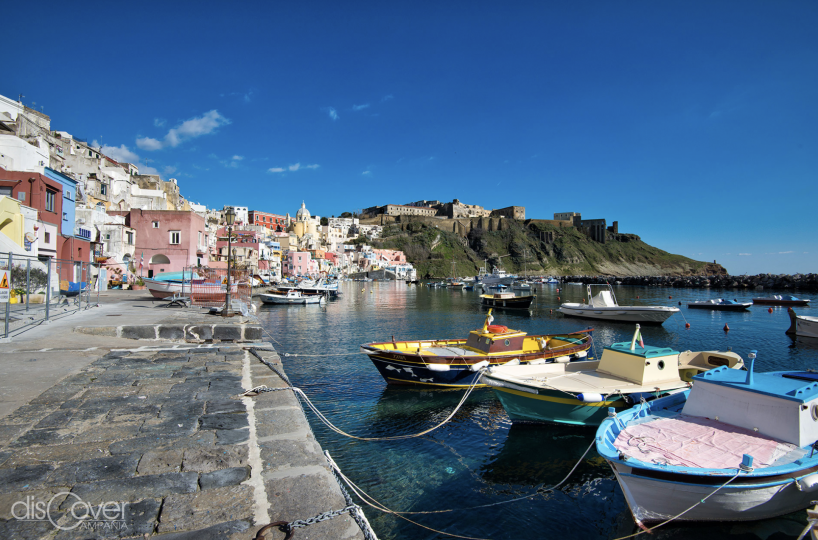
This is the story of Procida, intimate and tiny (3.7 square kilometres), immersed in the Tyrrhenian Sea like the surly pearl of a wild oyster, so fascinating that it tickled the fancy of medieval fantasies, poems and visions of storytellers cast on the routes of distant paradises.
Today, the navigators of summer arrive, and it is a fatal place for artists, a sublime set for cinema. And if the stars of the silver screen nourish the myths of the present, they recall a path already outlined in literary masterpieces, from Virgil to Horace, from Juvenal to Boccaccio, all the way to 'Graziella', the novel by Alphonse de Lamartine, a French diplomat stationed in Naples, who was shipwrecked on the island during a boat trip.
The young coral worker, a fisherman's daughter, fell in love and was in love again with Lamartine, who described her as follows: 'Graziella had almond-shaped eyes, large, they were of that indefinite colour between dark black and the blue of the sea... a celestial hue that the women of Asia and Italy draw from the blazing fire of their sun and the serene blue of their sky, their sea and their nights'.
Procida is the smallest of the Neapolitan islands. It retains an authentic charm, expressing a deep seafaring identity punctuated by farming traditions. Its name derives from Prochyta, which means profuse, lifted by the waters, and it is set in the volcanic context of the Phlegrean area. As many as seven craters can be identified around its coasts, which are characterised by the alternation of cliffs and beaches within inlets and picturesque gulfs. The finds discovered on the nearby islet of Vivara bear witness to the fact that it was inhabited by the Mycenaeans from the 17th and 16th centuries B.C.: eras during which it became an important crossroads for the working and trading of metals. The more recent past, on the other hand, evokes the vicissitudes of the lord and feudal lord Giovanni da Procida, known for organising the Sicilian Vespers.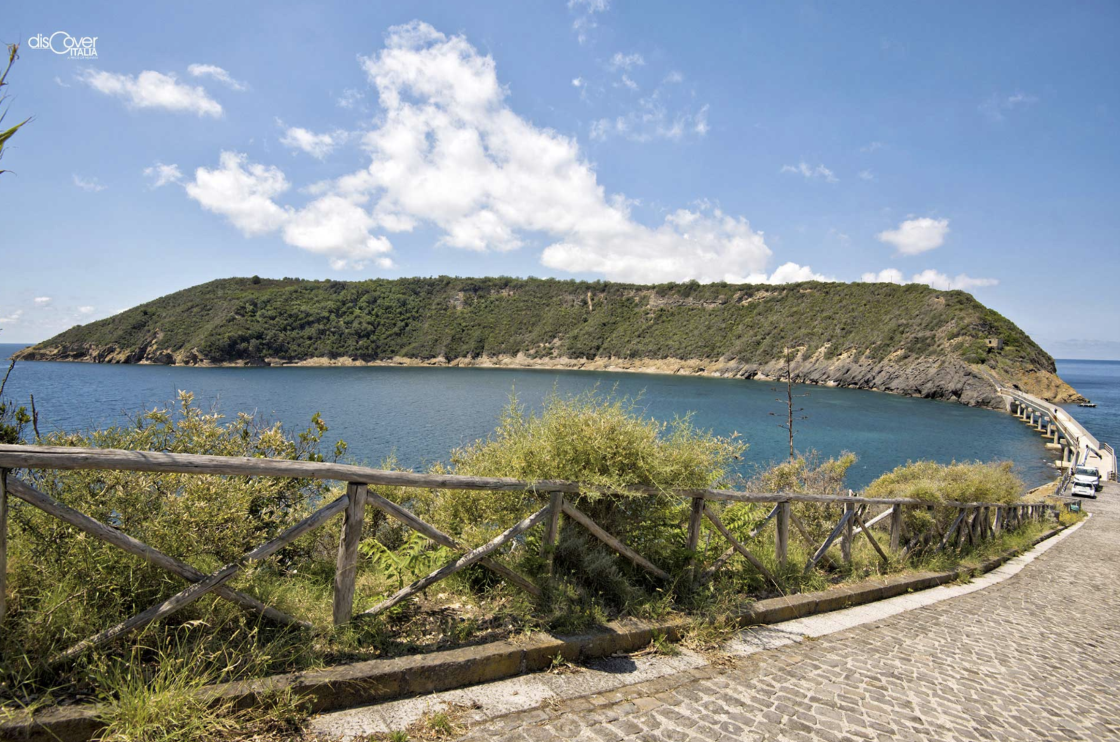
But the most captivating aspect of the island is attributed to the architecture of the houses that form the soul of its old villages. The houses are colourful, so that they are recognisable from afar, by sailors in the middle of the sea; and original, almost set like a jigsaw puzzle: they strike travellers as soon as they disembark at Marina Grande, the commercial harbour that is flanked by the landing place for fishing boats and the tourist marina. The visual impact is immediately captivating. It is no coincidence that the great Cesare Brandi, founder of the Institute of Restoration, extolled these views that leave one "breathless", emphasising the "alignment of tall houses, of all colours, narrow like a barricade, with so many arches closed in the middle, as if winking an eye". A symbol of crucial recollection, of an architecture that "is Mediterranean and represents the still-living offshoot, until recently, of late Roman and Byzantine architecture. Arches and vaults, nothing but arches and vaults, with certain external staircase solutions that are as lovely as a compliment'. Emblematic expressions that serve as guides along Procidan routes and itineraries.